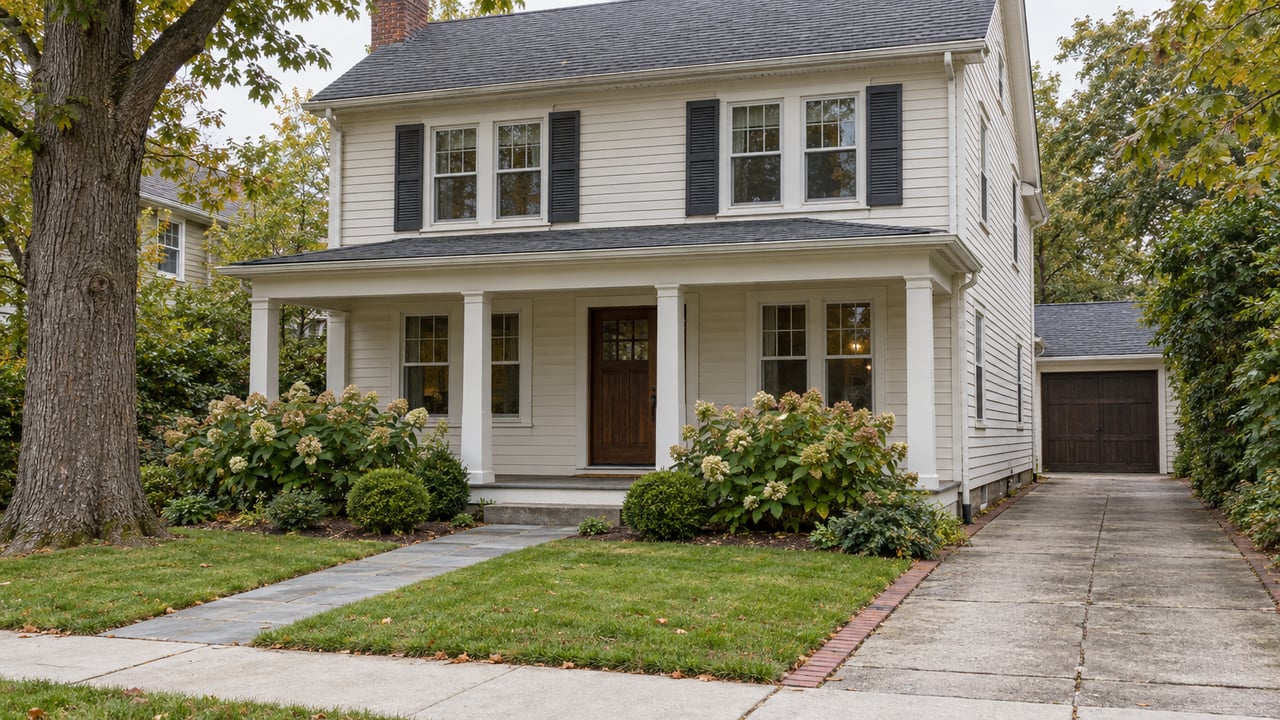
A Melrose listing may advertise a three-minute walk to the commuter rail. Buyers without a driveway or garage should also consider the City of Melrose rule prohibiting overnight parking on public streets from 2 a.m. to 6 a.m. year-round. Walk time and parking logistics are both part of evaluating train access.
Melrose runs three stops on the MBTA's Haverhill Line: Wyoming Hill, Melrose/Cedar Park, and Melrose Highlands. Oak Grove, the Orange Line's northern terminus, sits just over the border in Malden, close enough that some residents drive or bike to it instead of waiting on a commuter rail schedule. Morning trains from any of the three in-town stops generally land in the mid-20 to 30-minute range at North Station, a useful commute-time reference. Parking is another part of the commute to consider.
Overnight Parking and the Permit Option
Melrose generally prohibits overnight parking on public streets. If your home doesn't come with off-street parking, the city offers a Residential Overnight Permit, and the City of Melrose lists prices according to the calendar, not the calendar year you'll actually use it for.
| Purchase Window | Cost for Remainder of Calendar Year |
|---|---|
| January - March | $120 |
| April - June | $90 |
| July - September | $60 |
| October - December | $30 |
The permit is not a parking spot. It's access to a defined list of municipal lots and the three commuter-rail lots, and only between 2 a.m. and 6 a.m. Miss that window and you're back to square one. The rail lots themselves don't hand out free all-day commuter parking either. The Melrose Parking Office says all three stations run on pay-by-the-hour meters through the PayByPhone app; a phone-based option is available for riders without a smartphone. Depending on where they park, residents without a driveway may need to account for both a permit and hourly meter charges when using a rail lot.
Parking rules, permit fees, and lot access are additional factors to consider when evaluating transit access from a specific property.
Why the Train Instead of a Subway
The three-stop, 45-minute-headway setup Melrose has today is not an accident of geography. In the 1970s, the MBTA planned to extend the Orange Line north through Melrose as part of the Haymarket North Extension, replacing commuter rail with true rapid transit. Local opposition in Melrose to eliminating the grade crossings that extension would have required, crossings that carried important east-west local roads, helped stop the project at Oak Grove. A single track was retained for commuter rail service to Melrose, Wakefield, and Reading instead.
That decision, made fifty years ago over traffic on local streets, is the reason Melrose commuters today ride a 45-minute-headway commuter line instead of a subway that runs every few minutes. It's also why the news from this past August matters as much as it does.
The Funding That Just Landed
As Streetsblog Massachusetts reported, in August 2026 the MBTA announced $140 million in new federal funding to fully double-track the Haverhill Line between Reading and Ballardvale. The project supersedes an earlier, smaller plan from February 2025 that would have added a single "turnback track" in Reading, letting half the line's trains stop and reverse there every 30 minutes while trains continuing on to Lawrence and Haverhill stayed on an hourly schedule. The MBTA confirmed to Streetsblog Massachusetts that it has dropped the turnback-track approach entirely now that full double-tracking has real money behind it.
The agency has been explicit that this is not yet a guarantee of 30-minute trains through Melrose. An MBTA spokesperson told Streetsblog that frequency "also relies on train availability, as well as engineer and conductor availability, among other factors." What is settled is the capital commitment: real federal dollars aimed at removing the single-track bottleneck that has throttled Haverhill Line frequency since the 1970s standoff over grade crossings. The MBTA's broader Regional Rail Modernization Program has already stated its goal for inner-core stations inside Route 128, the category Melrose's three stops fall into, is service every 15 to 20 minutes, a sharp jump from the current 45-minute weekday pattern.
This is the kind of development that hasn't had time to work its way into how Melrose gets described to buyers. The grant was announced about five weeks before this post was published. It opens up possibilities for future service, but it does not establish a new schedule for Melrose.
What the Price Data Already Shows
Zillow's home value index put the typical Melrose home at $915,288 as of the end of August 2026, up 4.1 percent over the prior twelve months. That citywide number sits on top of a market where neighborhood-level pricing already diverges by station access. Areas built around Melrose Highlands and Wyoming, both anchored by their own rail stop, have tended to price above the East Side, a neighborhood known for its Colonials and newer construction but without a station of its own. Rail adjacency is already worth something in Melrose. The open question is whether the market has started pricing in what rail adjacency might be worth once frequency actually changes, and the answer, given how recent the funding news is, is probably not yet.
That gap between what a hidden mechanism does today and what it might be worth in three or five years is exactly where a buyer with the right information can make a more informed offer than someone working off last year's script.
Before You Write an Offer Near a Melrose Station
A handful of questions turn "walk to the train" from a marketing phrase into something you can actually price:
- Does the property include a driveway or garage, or would you need to buy the Residential Overnight Permit?
- If you'd need the permit, which calendar quarter would you actually be buying in, since the cost drops each quarter but the permit still expires December 31?
- Is the address within walking distance of one of the specific municipal or commuter-rail lots the permit covers, or would the nearest covered lot require a drive?
- Which of the three Haverhill Line stops, or Oak Grove across the Malden line, is the realistic daily option once you factor in the walk, not just the straight-line distance on a map?
- Have you checked whether the block has posted time-zone parking limits that would apply even with a valid overnight permit?
None of these questions are complicated. They're just the ones a listing sheet has no reason to answer for you.
A Few Practical Notes
Is overnight street parking ever allowed without a permit in Melrose? Generally, no. The city's Parking Office states that overnight street parking is not allowed anywhere in Melrose, though residents can request a limited exemption for temporary situations like out-of-town guests or a driveway under repair, capped at 12 requests per resident per year through the Melrose Police Department.
Do all three commuter rail stations offer the same parking setup? Yes, in structure. Cedar Park, Wyoming, and Melrose Highlands stations are all designated stops on the Residential Overnight Permit map and all use PayByPhone metered parking during the day. Specific lot capacity and posted time limits vary by location, so the practical experience still depends on the exact address.
Will 30-minute train service definitely happen in Melrose? Not on a fixed timeline. The $140 million grant funds the double-tracking work and station upgrades needed to remove the current single-track bottleneck. The MBTA has described the goal as more frequent, more reliable service on the Haverhill Line, while cautioning that actual frequency also depends on equipment and staffing.
Reading the transit story in Melrose takes more than a walk score and a headline price. It takes knowing which lot a specific address can actually use, what that access costs across a calendar year, and how a fifty-year-old fight over grade crossings still shapes the commute you'd be buying into today. If you want that read on a specific Melrose address before you write an offer, Nikki Palladino is happy to walk through it with you.
This article is general information, not legal, tax or financial advice. Consult a qualified professional about your situation.